Speakers
Meet the Speakers
We are proud to present an exceptional roster of speakers who are redefining the boundaries of crystallography through advanced computation and artificial intelligence.
Randy Read was born in Canada and received his PhD in Biochemistry from the University of Alberta in Edmonton, specializing in protein crystallography. After a postdoctoral fellowship at the University of Groningen in the Netherlands, he returned to Alberta as a faculty member in the Department of Medical Microbiology and Immunology. In 1998, he moved to Cambridge to join the new Cambridge Institute for Medical Research. His research focuses on developing advanced likelihood-based methods for determining the structures of proteins and other macromolecules. He is best known for his contributions to the program Phaser for molecular replacement and SAD phasing, which is a component of both the Phenix and CCP4 packages.
Professor Billinge, a distinguished materials scientist and Fellow of the American Physical Society, is recognized for pioneering atomic pair distribution function (PDF) analysis and advancing artificial intelligence and machine learning in crystallography. He studied at Oxford University and the University of Pennsylvania, and began his career at Los Alamos National Laboratory and Michigan State University. He joined Columbia University in 2008 and held a joint appointment at Brookhaven National Laboratory. He is now Professor in the Materials Department and Director of the California Nanosystems Institute at UC Santa Barbara. He was awarded the 2025 Gregori Aminoff Prize in Crystallography.
Dr. Terwilliger is a senior scientist at the New Mexico Consortium (NMC) and a fellow of the National Academy of Sciences. He spent many years as a scientist at Los Alamos National Laboratory (LANL). A pioneer in computational structural biology, he developed automated methods for determining macromolecular structures using X-ray crystallography and cryo-electron microscopy. He led the development of software tools such as SOLVE, RESOLVE, and key components of the Phenix suite, enabling researchers worldwide to determine complex 3D structures more quickly and accurately.
Dr. Olga Anosova is a mathematician and data scientist in the Department of Computer Science, University of Liverpool, where she conducts research at the Materials Innovation Factory. Originally trained in dynamical systems, she has pioneered the emerging field of Geometric Data Science, bridging pure mathematics and materials chemistry. Dr. Anosova is best known for developing Pointwise Distance Distributions (PDD), a powerful continuous isometry invariant that resolves ambiguities in the representation of periodic crystals. Her algorithms, which operate in near-linear time, have been instrumental in detecting thousands of duplicate structures within massive datasets, including Google’s GNoME database and the Protein Data Bank, significantly improving the integrity and reliability of global materials data.
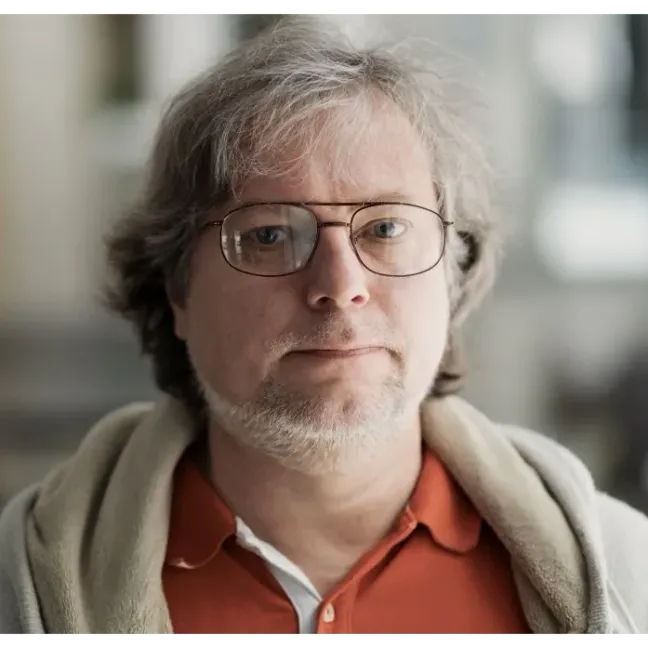
Dr. Saulius Gražulis is a Research Professor at the Institute of Biotechnology at Vilnius University in Lithuania, specializing in computational crystallography and structural biology. He is best known for leading the creation and maintenance of the Crystallography Open Database (COD), the world’s largest open-access collection of small-molecule crystal structures. An advocate for open science, Dr. Gražulis developed software infrastructure for automated data curation and validation, ensuring hundreds of thousands of crystallographic entries remain freely available to the global research community. His commitment to Open Data, Open Standards, and Open Source has democratized access to structural data and advanced cheminformatics.
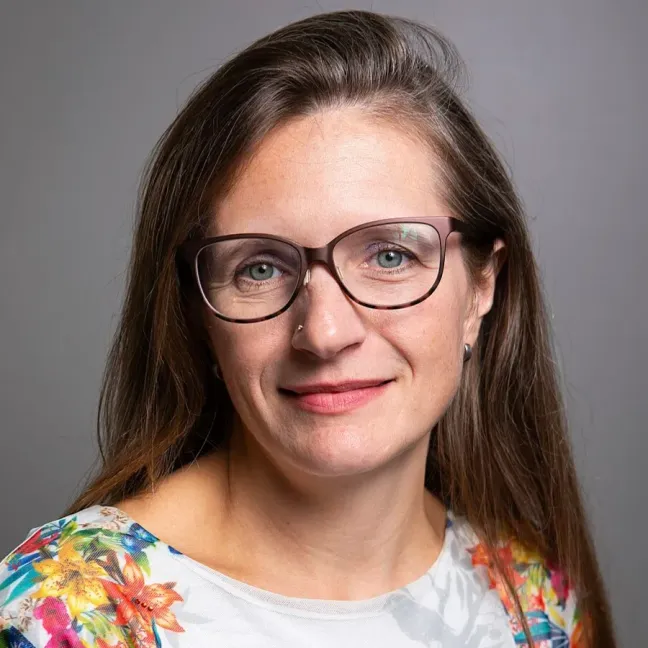
Dr. Eva Zurek is a Professor in the Department of Chemistry at the University at Buffalo, SUNY, where she is a leading authority in theoretical and computational materials chemistry. She is best known for her pioneering research on matter under extreme conditions, particularly high pressure, and for developing XtalOpt, an open-source evolutionary algorithm for crystal structure prediction. Her work has been instrumental in the discovery of novel high-temperature superconductors, such as superhydrides, and in providing insights into the chemistry of planetary interiors. By combining first-principles quantum mechanical calculations with machine learning techniques, Dr. Zurek continues to drive the design of new materials with tailored electronic and magnetic properties.
Dr. Daniel Widdowson is a Senior Software Engineer at the AIchemy Hub and a researcher at the University of Liverpool, where he bridges mathematics, computer science, and materials chemistry. Based at the Materials Innovation Factory, he specializes in developing geometric descriptors and artificial intelligence tools for computational crystallography. He is renowned for his work on the Crystal Isometry Principle and for creating continuous isometry invariants, such as Average Minimum Distances, which enabled the efficient detection of duplicate crystal structures in massive datasets, including the Cambridge Structural Database. Dr. Widdowson’s research has advanced the capabilities of crystal structure prediction and the automated navigation of materials space.
Dr. Niaz Abdolrahim is an Associate Professor of Mechanical Engineering and Materials Science at the University of Rochester and a Staff Scientist at the Laboratory for Laser Energetics. She specializes in multi-scale modelling of materials under extreme conditions, from nanoscale metallic multilayers to high-energy-density systems. Dr. Abdolrahim is particularly noted for her innovative application of machine learning to materials characterization; she has led the development of robust deep learning frameworks designed to automate the classification and analysis of massive X-ray diffraction datasets. By successfully integrating real-world experimental data with synthetic training models, her work addresses critical bottlenecks in data interpretation, enabling rapid and accurate identification of crystal structures and phase transformations.
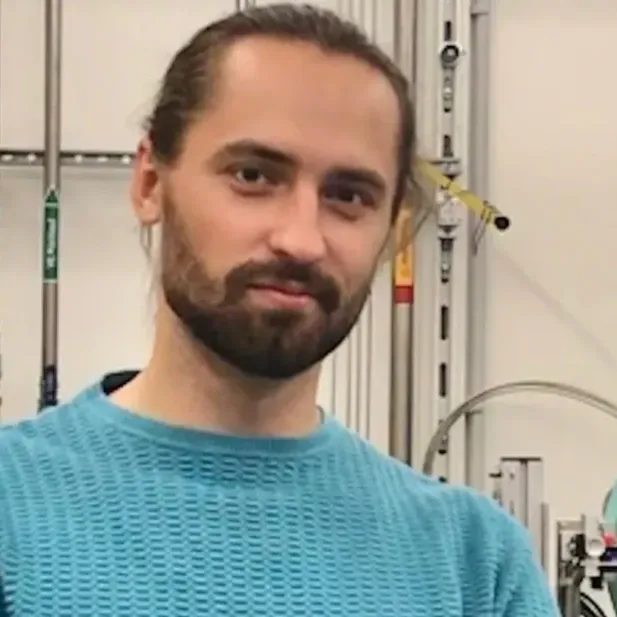
Dr. Toms Rekis is a researcher at Goethe University Frankfurt, specializing in physical organic chemistry and advanced crystallographic methods. His work explores the thermodynamics and structural complexity of molecular crystals, focusing on the formation of solid solutions and mechanisms of enantiomer recognition in the solid state. Dr. Rekis is at the forefront of the AI for Science movement in crystallography; he has been a key contributor to the development of PhAI, a pioneering deep-learning framework that uses artificial intelligence to solve the crystallographic phase problem. Beyond AI, his research encompasses the application of superspace methods to model complex high-Z' structures, bridging the gap between experimental diffraction data and theoretical understanding of material properties.
Dr. Jonas Nyman is a Research Scientist at the Cambridge Crystallographic Data Centre (CCDC), specializing in computational solid-state chemistry and developing methods for crystal structure prediction (CSP). His work focuses on modelling organic molecular crystals, investigating polymorphism, and understanding temperature-dependent material properties. Dr. Nyman has been a key contributor to the CCDC’s blind tests of crystal structure prediction, which benchmark and drive progress in the field. He developed AutoFIDEL, a tool to automate and improve matching crystal structures to powder diffraction patterns, and has advanced the study of porous molecular crystals and clathrates by combining CSP with experimental techniques.