Quantum Technology Summer School 2026

Espace 4 Saisons
May 24 to June 5, 2026

Meet the organiser and our keynote speakers

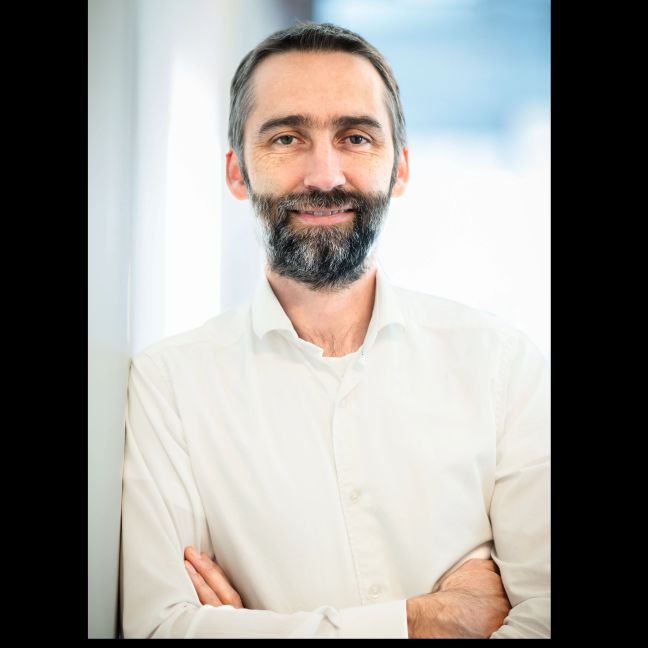
Mathieu JuanUniversité de Sherbrooke

Mathieu Juan work interests include superconducting, optical, and mechanical quantum systems. His research focuses in particular on the use of hybrid microwave/mechanical systems for quantum information processing and quantum sensing. He is the co-author of the first theoretical proposal on optical levitation, which gave rise to the highly active field of levitodynamics. Mathieu Juan pursued postdoctoral studies in Spain, Australia, and Austria before becoming an Assistant Professor in the Department of Physics at the University of Sherbrooke, where he also serves as the Scientific Director of the Quantum FabLab at the Institut quantique and as the Associate Director of the Institut quantique. He is the Chairholder of the INO Research Chair in Hybrid Quantum Systems and is the principal investigator of the CanQuEST Consortium, which brings together six Canadian universities. Mathieu Juan is also the co-founder of SilQ Connect.

Erika JanitzUniversity of Calgary

Erika Janitz has a unique background at the intersection of electrical engineering and physics. She explores the use of tiny magnetic moments—known as "spins"—associated with defects in diamonds as memory elements in quantum computing or atom-sized quantum sensors. During her graduate studies at McGill, she characterized a novel diamond defect and explored its application for building quantum networks. Specifically, she developed optical resonators for enhancing fluorescence emission, which can carry quantum information over long distances. As a postdoctoral researcher at ETH, Erica Janitz used individual spins as magnetic-field sensors to study few-molecule samples of DNA. There, she developed a technique for discriminating between different geometries -- known as conformations -- of otherwise identical molecules by their unique magnetic signatures. In addition, her lab will pursue a milestone in diamond-based quantum sensing: detecting individual nuclear spins in a single molecule. Such ground-breaking developments are poised to greatly impact quantum sensing and quantum networking implementations based on diamond defects. 

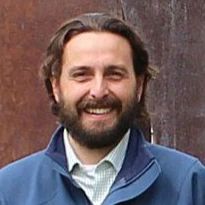
Paul BarclayUniversity of Calgary

Paul Barclay completed his Ph.D. in Applied Physics at the California Institute of Technology in 2007, where he performed early experiments in nonlinear optics with high-Q silicon photonic crystal cavities. In 2008 he joined Hewlett Packard Labs, in Palo Alto, California, where he helped establish the emerging field of diamond quantum nanophotonics. His undergraduate degree is in Engineering Physics from UBC, where he received the APEGBC Gold Medal. Since starting his lab at the Institute for Quantum Science and Technology at the University of Calgary 2011, he has performed pioneering research in the field of diamond photonics, spin-optomechanics, and in nanophotonic quantum sensors. His group’s impact was recognized in 2019 by the Herzberg Medal for early career researchers from the Canadian Association of Physicists, and in 2017 by an NSERC Discovery Accelerator award. His group members, who also work at the NRC Nanotechnology Research Centre in Edmonton, have won numerous awards, including a Governor General's Gold Medal.

Shabir BarzanjehUniversity of Calgary

Shabir Barzenjeh is an Assistant Professor of Physics at University of Calgary and the founder of QuantaSensing. He is an experimental and theoretical physicist with expertise in superconducting quantum circuits, electro and optomechanics, and microwave-to-optical conversion. His primary research focus concerns the dynamics and interactions of nanofabricated electrical, mechanical and photonic quantum circuits. He recently demonstrated integrated electro-optomechanical devices with photonic and phononic band gaps operating in the quantum regime. His scientific research on microwave-optical converter based on the mechanical resonators has opened a new method for coherently converting optical photons to microwave photons.

John DavisUniversity of Alberta

John Davis is a Professor of Physics at University of Alberta, and the CTO and Co-Founder of Zero Point Cryogenics. His research lies at the intersection of precision nanofabrication and ultra-low temperature physics. His group has been involved with pushing cavity optomechanics into the quantum regime since 2010, which has led—among other things—to the demonstration of the world’s most sensitive torque sensor and the ground-state cooling of a piezoelectric mechanical resonator. His group is also actively working on superfluids in restricted geometries, and recently mapped the phase diagram of superfluid 3He under confinement. He has been recognized for his work through the University of Alberta Petro-Canada Young Innovator Award in 2016, and the Alfred P. Sloan Foundation Research Fellowship in 2013.

Thomas JenneweinSimon Fraser University

Thomas Jennewein completed his PhD in 2002 at the University of Vienna. His thesis research on quantum communication and teleportation experiments with entangled photon pairs was awarded the Loschmidt-Prize by the Austrian Physical-Chemical Society. From 2004 to 2009, Jennewein was a Senior Scientist at the Vienna branch of the Institute for Quantum Optics and Quantum Information (IQOQI), working on experimental quantum photonics. Jennewein has played a key role in the advancement of long-distance transmission of entangled photons over free space, and his work on quantum cryptography using entangled photons was selected by the American Physical Society as one of the ``"Top Ten Highlights of 2000". His present research focuses on the applications of quantum photonics and quantum optics, in particular for long-distance quantum communications in free-space and using satellites, as well as fundamental aspects of the quantum world. Jennewein is the principle investigator for the Canadian Quantum Satellite “QEYSSAT” where he is actively working with industry partners on the technical development, and with a team of core users from several institutions across Canada and internationally.

Chris WilsonUniversity of Waterloo

Christopher Wilson is a Professor in the Department of Electrical and Computer Engineering at the University of Waterloo, with a cross-appointment in the Department of Physics and Astronomy. In 2004, Wilson moved to Sweden to work on a quantum computing project at Chalmers University of Technology, where he and his team created an electronic 'mirror' that could be moved at one-quarter the speed of light using magnetic fields. This breakthrough allowed them to separate the photon pairs, prevent their annihilation, and convert them into real photons that could be observed. Wilson continues his work on quantum information, microwave quantum optics, and nonlinear dynamics at the University of Waterloo. He has received numerous accolades for his research, including the 2012 Wallmark Prize from the Royal Swedish Academy for his work on the Dynamical Casimir Effect (DCE). His groundbreaking work on DCE was named one of the Top 5 Breakthroughs of 2011 by Physics World and earned the #1 Reader's Choice spot on Nature News.

Benjamin BrockUniversité de Sherbrooke

Benjamin Brock is an Assistant Professor who recently joined the Department of Physics at Université de Sherbrooke. He brings expertise in experimental research focused on new strategies for bosonic quantum error correction using superconducting circuits. He received his PhD in Physics from Dartmouth College in 2021 for his work on the cavity-embedded Cooper pair transistor, an ultrasensitive electrometer capable of operating at the single-photon level.

Baptiste RoyerUniversité de Sherbrooke

Baptiste Royer is an Assistant Professor of Physics at Université de Sherbrooke. He is an expert in the theory of superconducting circuits and quantum error correction. His interests include the design and modeling of practical error correction codes for quantum computing, communications and sensing. He participated in the first demonstrations of long-distance on-demand entanglement in superconducting qubits, and introduced several error-correction schemes for bosonic systems during his postdoctoral studies at the Yale Quantum Institute.

Isabelle LacroixUniversité de Sherbrooke

Isabelle Lacroix is an Associate Professor at the Université de Sherbrooke. She has been the Associate Dean for Development and International Affairs at the Faculty of Arts, Humanities, and Social Sciences since June 2001. Her research focuses on public policy, multi-stakeholder governance in a democratic context, and the social responsibility of researchers. She is also an affiliated researcher at the Institut quantique, where she studies the societal impacts of integrating disruptive technologies.

Sarah JennaQV Studio

With a Ph.D. in Cellular and Molecular Biology from Aix-Marseille I University in France, complemented by professional training from MIT on sustainable development in the industry in 2023, Sarah Jenna’s background is as diverse as it is profound. Over more than two decades, Jenna has made significant contributions to the academic field, including roles at McGill University, the Genome Quebec Innovation Center, and as Canada Research Chair in Integrative Genomics and Cell Signaling at the University of Quebec in Montreal (UQAM). Her academic career is marked by active participation in founding two university research centers focused on drug discovery, Pharmaqam and the Réseau Québécois de Recherche sur le Médicament (RQRM), showcasing her commitment to advancing pharmaceutical research and development. In 2016, Jenna co-founded My Intelligent Machines Inc., a startup at the forefront of developing artificial intelligence solutions tailored for drug development within the precision medicine framework. In 2023, Jenna took on the role of general director of QV Studio, a startup studio with the mission to create and de-risk startups focusing on developing and commercializing quantum technologies. This position represents a new chapter in her career, marrying her extensive biotechnology and AI experience with the burgeoning quantum technology field.

Olivier-Michel TardifSilQ Connect

Olivier-Michel Tardif is Co-Founder and CEO of SilQ Connect. With over eight years of expertise in quantum physics, optics, and photonics, Olivier-Michel brings a unique blend of technical insight and entrepreneurial drive to SilQ Connect’s mission of creating powerful, distributed quantum computing networks. During his doctoral studies at the Institut quantique - Université de Sherbrooke, Olivier-Michel specialized in optomechanical quantum transduction, advancing the performances of quantum interconnections. His research focuses on flux-mediated coupling architectures, a core component of SilQ Connect’s technology. In addition to his technical background, Olivier-Michel holds advanced training in entrepreneurship for quantum technologies, enabling him to approach product development and market strategy with a business-focused mindset. Recognized with prestigious awards, including the Alexander-Graham-Bell Graduate Research Scholarship, Olivier-Michel Tardif is dedicated to transforming complex quantum research into practical, high-impact applications. His work at SilQ Connect focuses on unlocking the full potential of quantum computing by building modular, resilient, and distributed infrastructure.

Brynle BarrettUniversity of New-Brunswick

After almost a decade working in France with leading experts in cold atoms, quantum sensing, and inertial navigation, Brynle (Brinley) Barrett joined the UNB physics department and established the QSUM lab in 2021. His lab primary research interests include light-matter interactions, laser cooling and trapping of neutral atoms, ultra-stable laser systems, precision measurements of fundamental constants and matter-wave interferometry. Originally from Halifax, Nova Scotia, he received his BSc in Physics & Mathematics from Saint Mary’s University in 2005. He then moved to Toronto for his PhD studies at York University, where he focussed on precision measurements with atom interferometry. In 2012, he joined the group of Philippe Bouyer and Baptiste Battelier at LP2N in Bordeaux. As a post-doc, he worked primarily on the ICE experiment where he helped realize the first tests of the Einstein’s equivalence principle with cold atoms in microgravity. In 2015, he joined the French tech company iXblue (now Exail) — experts in optical gyroscopes, photonic components, and inertial navigation. There, he led the development of the first three-axis quantum accelerometer in collaboration with LP2N, and co-wrote several patents on quantum technologies.

Lina DonnardNOBOX

Brazilian/Canadian citizen with 20 years of professional experience in more than 20 countries in the Americas and Europe. Expertise in career and life coaching, human development, social entrepreneurship, solopreneurship, executive and academic mentoring, international business strategy and development, public speaking, international education, content production, teaching, partnership and relationship management, negotiation, networking, event and international missions’ organization, non-governmental organization foundation and management, digital marketing, multicultural teamwork, training conception and coordination, client service, video recording, service export. Fluent English, French, Spanish, Italian and native Portuguese. She holds a bachelor’s degree in International Relations from UNI-BH and a master’s degree in International Studies from the Université de Montréal.

Dany Lachance-QuirionNord Quantique

Dany earned his PhD from Université de Sherbrooke in 2018 and continued his research in quantum magnonics as a postdoctoral researcher in the group of Yasunobu Nakamura at University of Tokyo, Japan. As the company’s very first employee, he joined Nord Quantique in 2020. Now serving as Vice President, Quantum Hardware, he oversees all of the company’s experimental activities. In particular, Dany led the experimental efforts that resulted in Nord Quantique’s first demonstration of autonomous quantum error correction.

Chloé Gauvin-NdiayeUniversité de Sherbrooke

Chloé Gauvin-Ndiaye is a theoretical physicist specializing in the study of strongly correlated quantum materials. She completed a PhD at the Université de Sherbrooke, which was awarded the institution’s prize for best doctoral thesis. Her research focused on the development and improvement of the Two-Particle Self-Consistent (TPSC) approach applied to the Hubbard model, a central theoretical framework for understanding complex phenomena such as magnetism and unconventional superconductivity. During her doctorate, she published eight scientific articles, four of which form the foundation of her thesis, reflecting the breadth and depth of her scientific contributions. Her work led to significant advances in the modeling of electron-doped cuprates by refining theoretical predictions and introducing new experimentally measurable parameters, while substantially improving the accuracy and scope of the TPSC method. Chloé Gauvin-Ndiaye subsequently pursued her career at the Sherbrooke-based startup Nord Quantique, where she applied her expertise to the development of fault-tolerant quantum computers. She is currently a research professional in the Department of Physics at the Université de Sherbrooke, where she works on the development of first-principles numerical methods for the study of strongly correlated materials.

Jack SankeyMcGill University

Jack Sankey completed his Ph.D. studying spin transfer torques at microwave frequencies in Dan Ralph's group at Cornell. After graduating (2007), he briefly studied quantum dots in 2DEGs at Princeton, then switched to the field of optomechanics in Jack Harris' group at Yale. In 2012, he joined the McGill Physics Department as an assistant professor and received tenure in 2018. He is now the MacDonald Chair of Physics at McGill. Sankey holds the Tier II CRC of Experimental Optomechanics (2012-2022), the Alfred P. Sloan Fellow (2013-2015) and the John David Jackson Teaching Award (2018). These days, he and his wife (Prof. Lilian Childress) co-supervise the Quantum Optics and Sensing Lab at McGill, where they study quantum optomechanics, diamond quantum optics, spin transfer, and (together with Prof. Shirin Enger) quantum-limited medical sensors.

Philippe St-JeanUniversité de Montréal

In July 2021, Philippe St-Jean joined the Department of Physics at Université de Montréal as an Assistant Professor and holder of a Quantum Photonics Research Chair funded by Québec’s Ministère de l’Économie, de l’Innovation et de l’Énergie. He received his PhD from Polytechnique Montréal in 2016 under the supervision of Professor Sébastien Francoeur, after which he held a postdoctoral position at the Centre for Nanoscience and Nanotechnology (Université Paris-Saclay), supported by NSERC (2016-2018) and Marie Skłodowska-Curie (2018-2020) fellowships in the group of Professor Jacqueline Bloch. One of his most significant contributions was the first experimental realization of a topological laser. From 2020 to 2021, he worked as a researcher at Anyon Systems, where he contributed to the development of quantum processors based on superconducting circuits. Since 2022, he has been one of the founding members of the Courtois Institute and leads its Quantum Photonics research axis.

Robert KentTeam Lead, Quantum Success Engineering, QBlox

Robert Kent is a Senior Quantum Success Engineer at Qblox, focusing on the intersection of quantum technologies, machine learning, and hardware development. Currently completing their PhD in Physics at The Ohio State University, they have hands-on experience in crafting innovative machine learning models and control algorithms for quantum computing applications. Robert has engineered algorithms for quantum state classification and has designed energy-efficient solutions for chaotic systems, emphasizing scalability and low latency. Their collaborative efforts have included managing research teams and organizing cross-institutional events aimed at advancing the field of quantum machine learning.

Our partners

Location

Espace 4 Saisons

4940 Chemin du Parc

Orford, Québec

Canada, J1X 7N9

Dates

Registration period:

February 23, 2026 - 8:01 AM EST - June 4, 2026 - 9:00 PM EDT

Submission period:

November 24, 2025 - 9:01 AM EST - February 22, 2026 - 9:00 PM EST

Contact us

If you have any questions, please contact quantumtechnology.summerschool@usherbrooke.ca

Powered by
Run your next event
with Fourwaves