WSSA Annual Meeting 2027
Welcome
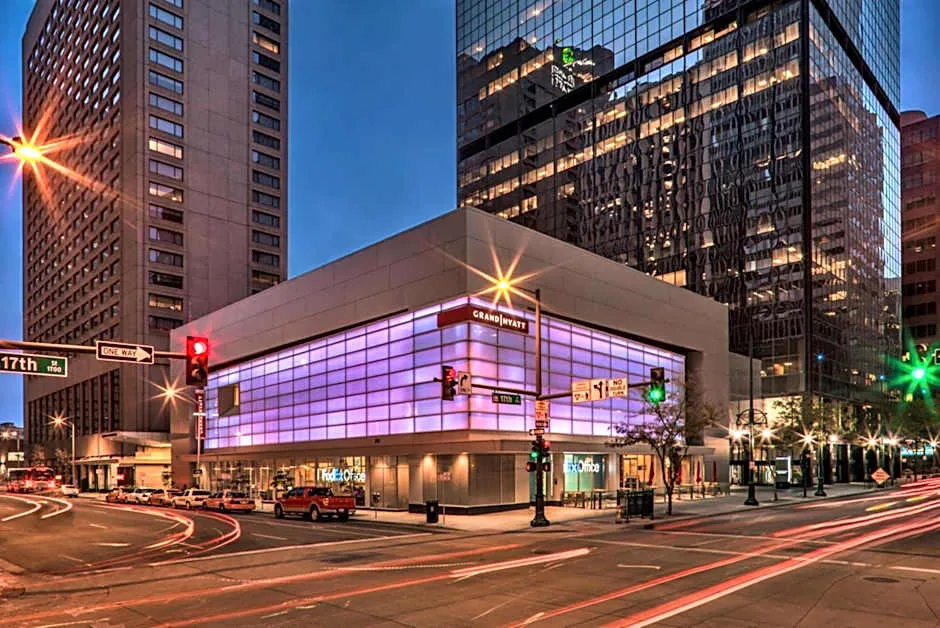
Welcome to the Mile High City! We're thrilled to have you join us this February at the Grand Hyatt Denver, located in the heart of downtown just steps from the 16th Street Mall, vibrant dining, and stunning views of the Rocky Mountains. Whether you're here to connect with colleagues, gain fresh insights, or simply enjoy everything Denver has to offer, we've planned an exceptional experience from start to finish. Inside this guide, you'll find everything you need to make the most of your time with us — from hotel amenities and event schedules to local recommendations. We can't wait to see you in Denver!
Activity Recommendations
Getting Around Denver
From the Airport: Skip the winter driving and take the RTD A Line train — it runs from Denver International Airport directly to Union Station downtown in about 37 minutes, with an airport fare of $10 for most adult riders. Trains are climate-controlled with dedicated luggage storage, and you can pay by simply tapping a contactless credit card or mobile wallet at the platform validator. From Union Station, the Grand Hyatt is a short ride away — or a brisk 15-minute walk if you're feeling adventurous. Taxis and rideshares are also readily available at the airport, though allow extra time and budget during snowy conditions.
Downtown: Once you've arrived, you may not need a car at all. The hotel sits within easy walking distance of the 16th Street Mall, where the Free MallRide shuttle runs the length of downtown — a welcome option when temperatures drop. Rideshares are plentiful for anything beyond walking range.
February Weather Tips: Denver winters are famously unpredictable — you might see sunshine and 60 degrees one day and snow the next. Pack layers, comfortable waterproof footwear, and sunglasses (the Colorado sun is strong even in winter, especially reflecting off snow). And remember, you're at 5,280 feet: drink plenty of water, go easy on the alcohol your first night, and give yourself a little grace if you feel winded — that's just the altitude saying hello.
Make the Most of Your Time in Denver
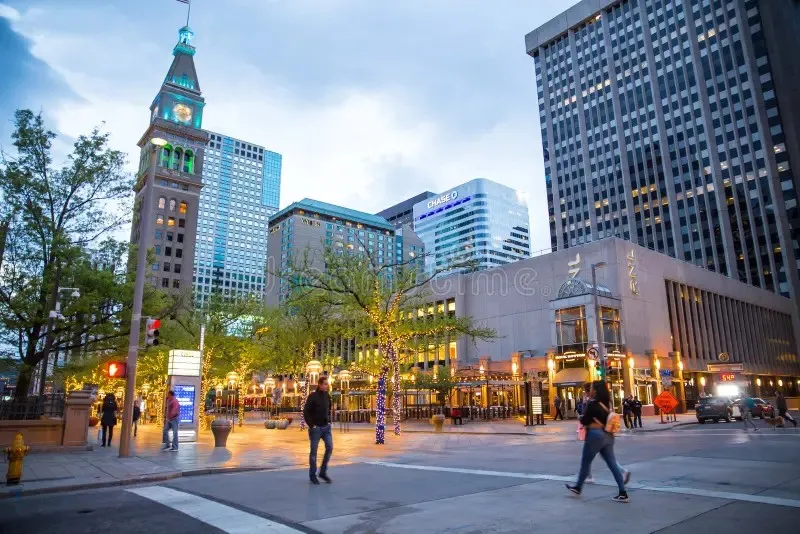
When the day's sessions wrap up, downtown Denver is yours to explore — and February is a surprisingly great time to do it, with world-class attractions just steps (or a short, warm rideshare) from the hotel.
Art & Culture: The Denver Art Museum, one of the largest art museums between Chicago and the West Coast, spans three architecturally stunning buildings and makes for a perfect indoor afternoon (note: closed Wednesdays). For something completely different, Meow Wolf's Convergence Station offers four floors of immersive, mind-bending art that has to be experienced to be believed — plan on two to three hours. History buffs can tour the Molly Brown House, home of the "Unsinkable" Titanic survivor and one of Denver's most colorful characters.
Landmarks & Photo Ops: No visit is complete without saying hello to the Big Blue Bear — the beloved 40-foot sculpture peering into the Colorado Convention Center, just a few blocks from the hotel. Then head to Union Station, Denver's beautifully restored 1914 rail depot, where the Great Hall buzzes with restaurants, cocktail bars, and cozy corners perfect for a winter evening.
Eat & Drink Like a Local: Denver's craft beer scene is legendary, and you don't have to go far. Wynkoop Brewing Company — the city's original brewpub — anchors Lower Downtown near Union Station, with dozens more taprooms and acclaimed restaurants scattered throughout LoDo and the Dairy Block.
Feeling Ambitious? The Rocky Mountains are calling. World-class ski resorts sit within a 90-minute drive, and several shuttle services run daily from downtown — a memorable way to bookend your trip with a day on the slopes.
Important Dates
Submission Site Opens: October 1, 2026
Titles, Author & Abstract Due: December 18, 2026. (This deadline applies to symposium papers, as well as to volunteer papers and posters.)
Last Day to Sign Up as a Volunteer Contest Judge: December 1st, 2026
Hotel Booking Deadline: Thursday, January 14, 2027
ALL Presentations (including symposia and SST) and Student Poster Uploads are Due: February 1, 2027
CALL FOR PAPERS
You are invited to submit titles and abstracts for oral papers and posters to be presented at the WSSA Meeting in Denver, Colorado February 8-11, 2027. An individual may personally present only one volunteer oral presentation (includes SST for students) and/or poster. This rule will be strictly followed. However, any individual may be co-author of papers presented by other authors and may present again via invited symposium, participation in the Travel Enrichment Experience, or as a Science Policy Fellow.
DEADLINE for TITLES and AUTHOR, ABSTRACT SUBMISSIONS (INCLUDING SYMPOSIUM)
Titles, author(s) information, and abstracts must be submitted electronically by December 18, 2026, to be considered. Submission or changes after this deadline will not be accepted. This deadline applies to symposium papers, volunteer and student papers and posters. Primary contact authors will receive an email indicating their title was received. Symposia participants should also forward or send copy of abstract to the symposium organizer.
The Program will be printed exactly based on what was submitted, other than format and font changes for uniformity; therefore, proofread your submission very carefully. Fourwaves now has an app that we will leverage for the most up-to-date program information.
MEETING SCHEDULE
Volunteer papers will be presented within a 15-minute schedule. Concurrent sessions dictate that the time schedule be strictly followed. To allow for introduction, transition of speakers, and questions, you should plan to complete your oral presentation in 12 or 13 minutes. Papers should report the results of completed research or other substantive information.
There are two sessions for presentation of posters (sorted by odd and even numbers). Authors are expected to be at their poster during the period reserved for viewing the poster to answer questions and to discuss their research with interested parties.
PREPARATION and SUBMISSION of ABSTRACT
Volunteer and Student papers, posters, and symposium papers all require abstracts to be submitted electronically. Deadline is December 18, 2026 for submission of the abstract. Additional instructions will be provided on the Title/ Abstract Submission Page in addition to the following are the guidelines for the preparation and submission of an abstract. Be alert to additional instructions that may appear on the site itself.
1. Content - The abstract should include a brief overview of essential aspects of experimental procedures and should highlight significant results and their interpretation. Write the abstract so it consists entirely of information. Do not include statements such as “The results of the experiments will be presented” or “The significance of these results will be discussed.”
2. Formatting - Typing and format instructions will be provided on the Title/Abstract Submission Page of the website. Capitalize the first letter of all major words in the title and end the title with a period. Include both the common and scientific names of weeds and uncommon crop plants in the title (authorship of plants is not necessary), but only the common names of herbicides and well-known crop plants. You do not need to type the title in bold-face; the system will do that automatically. The site will provide a method for indicating the presenter. Be sure to specify the presenting author. Title Example. Role of Adjuvants on Sulfonylurea Herbicide Efficacy.
3. E-mail Address - For better communication among researchers, place the e-mail address of the senior author following the last sentence of abstract.
4. Herbicide nomenclature - A list of common and chemical names of herbicides approved by the WSSA is available at http://wssa.net/Weeds/Tools/Herbicides. When the common name refers to the parent acid, the salt or ester forms used in the experiments should be identified at the first mention of the common name (e.g., methyl ester of diclofop). At the first mention of an herbicide application rate, list whether the weight is acid equivalent (ae) or active ingredient (ai) (e.g., kg ai ha-1). If no common name is available, use its designation (trade name or code) followed by the full chemical name. If the chemistry is confidential, identify the source (company) in parentheses after designation.
5. Adjuvant nomenclature - Where possible, use the WSSA Herbicide Handbook, 10th edition (2014), p.479-481; Weed Science (1985) 33 (Suppl. 1): 22-23; or the WSSA Monograph (1982) Adjuvants for Herbicides. Otherwise, use the most complete available chemical description of the adjuvant.
6. Weed nomenclature - Identify weeds by common names. At first mention of a weed, whether in the title or text, follow the common name with the scientific name (underlined and in parentheses). Do not repeat the scientific name in the text if given in the title. A list of WSSA approved common and Latin names of common weed species can be found at http://wssa.net/wssa/weed/composite-list-of-weeds/. If there is no WSSA-designated common name, use common scientific names from another source such as USDA PLANTS DATABASE or Hortus Third Dictionary
7. Crop nomenclature - Scientific names for crop plants are optional. They are not needed for well-known crops but should be included for less common crops and whenever needed for clarity. Place scientific names, underlined and in parentheses, following first mention of the common name, whether in the title or text.
8. Soil nomenclature - Include the soil series with textural classification and the subgroup name using the terminology of the U.S. Dept. Agric. Natr. Res. Conserv. Serv. publication, Soil Taxonomy, U.S. Gov. Printing Office, Washington, D.C. 1988. For soils outside the U.S.A., use the local official terminology.
9. Measurements - Report all measurements in International System of units (SI). Abbreviate units of measure if preceded by a number. See Weed Science (2003) 51:1029-1033 for additional suggestions and WSSA Herbicide Handbook, 10th edition (2014), p. 488-491 for metric conversions.
10. Abbreviations - Use abbreviations as shown at https://www.cambridge.org/core/services/aop-file-manager/file/620670584ea75bf1c628d10b/WSSA-APPROVED-ABBREVIATIONS-FOR-FREQUENTLY-USED-TERMS-Feb2022.pdf
11. Numbers - Use Arabic numerals for all numbers with two or more digits and for all measurements such as time, weight-length, area, quantity, or degree except when the number is the first word in the sentence. Spell out numbers when they are the first word in a sentence or when they are less than 10 and not measurements.
FORMAT and SUBMISSION of ORAL PRESENTATIONS
Section chairs must receive the presentation at least one week in advance of the meeting and no later than February 1, 2027. All presentations MUST be in PowerPoint (.pptx) for MS Windows (PC compatible). The section chairs have requested that ALL presentations be prepared and uploaded on the abstract submission site so that preloading prior to the meeting can be accomplished. Please limit the size of presentations to less than 200 MB. If your presentation contains video clips or animation you must contact the section chair for approval one week PRIOR to sending your presentation to ensure compatibility with the equipment. Limit fonts used in the presentation to basic fonts, as not all machines may have the same choice of fonts. Examples of standard fonts are Times, Arial, Courier, Tahoma, or similar equivalents. Section chairs and computer operators are not responsible for changes in fonts, bullets, and other formatting at the time of presentation.
Please coordinate with your section chair if you want to preview your presentation at the meeting to ensure that the formats/fonts are all as you intended them to be. Due to the limited time and equipment, last-minute editing is highly discouraged. Submission of files at the time of the presentation or at any other time during the session will NOT be allowed. Presenters will NOT be allowed to use their own computers in the sessions.
FORMAT and SUBMISSION of POSTER
The information presented as a poster is very similar to that presented as an oral paper, but it is presented physically on poster board rather than orally at the meeting.
1. Poster Boards. One space, 48 x 48 inches, will be provided for each poster. There will be no exceptions to the rule of one space per poster. Posters should be no larger than this size.
2. Content of Poster. Texts, graphs, and tables must be easily read from a distance of 6 feet (2 m). Titles and headings should be larger and readable from a greater distance.
3. Electrical connections, video equipment, or other special equipment are not available for posters.
4. At least one author, if multiple authors, must be present at the poster during the time designated exclusively for viewing the poster.
5. Posters presented by sustaining member companies may concern commercial products, but they must present results of completed research with these products rather than promotional material about them.
6. Graduate student posters in .pdf form must be uploaded at least one week in advance of the meeting no later than February 1, 2027, so that distribution to judges prior to the meeting can be accomplished.
COMMERCIAL EXHIBITS
The commercial exhibits are presented by Sustaining Members of WSSA and consist of educational information that may be of a promotional nature about products and/or services. Submission of title, author(s), or abstract is not required for Sustaining Member exhibits.
STUDENT SST and POSTER CONTEST INFORMATION
A. ELIGIBILITY
1. Any student who is a WSSA member and has registered to attend the current annual meeting is eligible to compete in the poster or Single Slide Talk (SST) presentation contest. Students are eligible for participation in the Student Competition multiple times during a M.S. program and a Ph.D. program.
2. A student can only participate in ONE contest per annual meeting, either the SST presentation contest or poster presentation contest.
3. A student can only win 1st place in the poster or oral presentation contest once per degree program. Once a student places 1st in a given contest (SST or poster presentation contest), they are no longer eligible to compete in said contest during the course of their current degree program. Examples: 1) A student may win 1st place in the poster presentation contest and 1st place in the oral presentation contest while in a M.S. or Ph.D. program; however, a student may not enter both contests at the same annual meeting. 2) A student may win 1st place in the poster or oral presentation contest in the M.S. degree program and then compete and win 1st place for an oral or poster presentation while in a Ph.D. degree program.
4. Persons who have graduated from a degree program (M.S. or Ph.D.) and are actively pursuing an additional degree may only enter the contest for that degree program during the first annual meeting following graduation.
B. RULES AND PROCEDURES
1. WSSA will only offer the SST competition (the 15-minute oral option will NOT be available). The SST provides students with the opportunity to profile their research and enhance communication skills.
2. Contest declaration must be made during the submission process if they wish to enter either the poster or SST contest (deadline of December 18, 2026). If a contestant does not select a contest declaration by this time, they will be ineligible for the contest.
3. Evaluation forms and additional rules will be posted to the WSSA website.
4. Students must also submit their presentation (.pptx) or poster (.pdf) by the deadline of February 1, 2027 to remain eligible for the contest.
GENERAL: Be alert to changes, modifications, and refinements to these guidelines between now and the meeting. This information will be published in the October and January issues of the WSSA Newsletter. For non-WSSA members, the WSSA Newsletter is available on the WSSA website (http://www.wssa.net ).
PROGRAM CHAIR CONTACT INFORMATION:
WSSA Program Chair: Dawn Refsell (programs@wssa.net)
Ex-Officio: Eric Gustafson (info@wssa.net)
Location
Grand Hyatt Denver
1750 Welton Street
Denver, Colorado
United States, 80202
Dates
Registration period:
September 1, 2026 - 12:00 PM MDT - February 11, 2027 - 1:00 PM MST
Submission period:
October 1, 2026 - 12:00 AM MDT - December 18, 2026 - 12:00 PM MST
Contact us
If you have any questions, please contact programs@wssa.net