Present
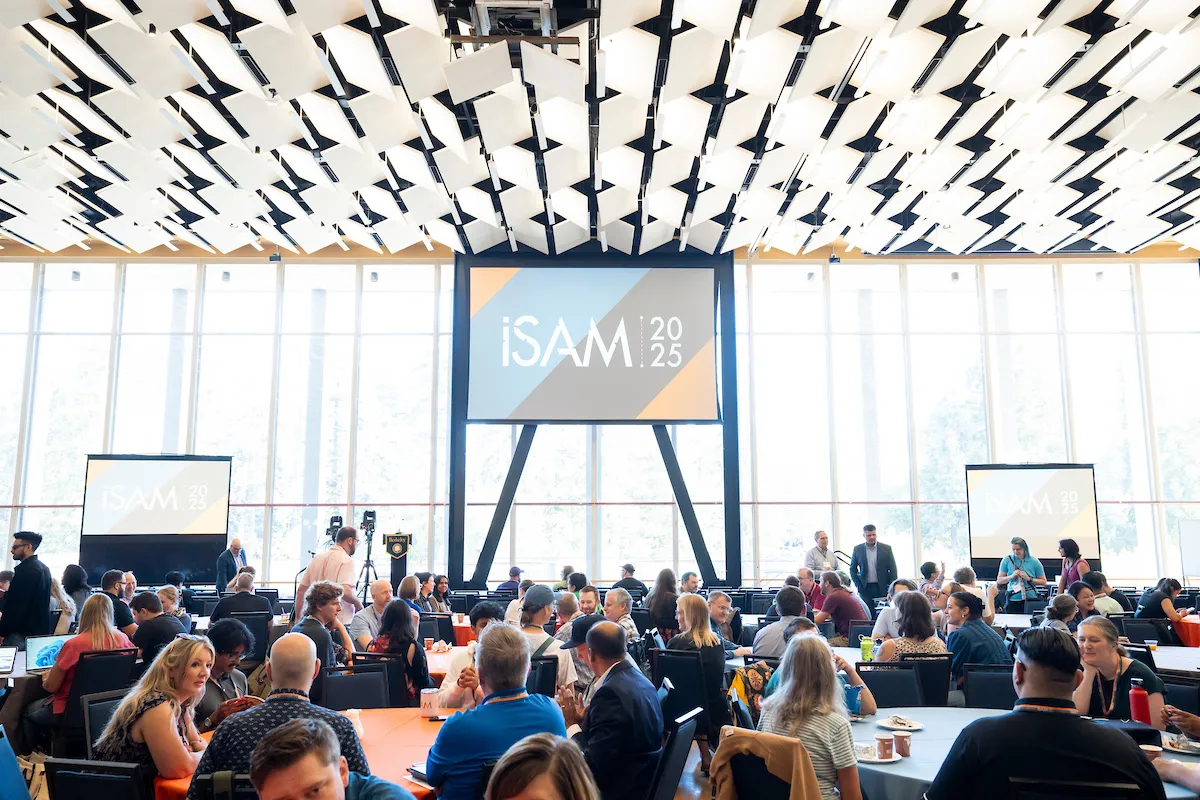
PRESENT at ISAM
Three Tracks for Presenting!
ISAM is the preeminent annual meeting for the academic makerspace community and as such encourages submissions that make contributions towards advancing practices, advancing equity, and expanding educational themes around such makerspace communities. Such contributions can take on the form of hypothesis-driven experiments, surveys and interviews, quantitative assessments, novel models, experimental pedagogies, new materials, machines, and making practices as well as makerspace equity, access, operations, and interdisciplinary and co-curricular collaborations.

Papers which are usually 4 to 6 pages long and published in the conference proceedings as well as presented during the conference as an oral presentation.
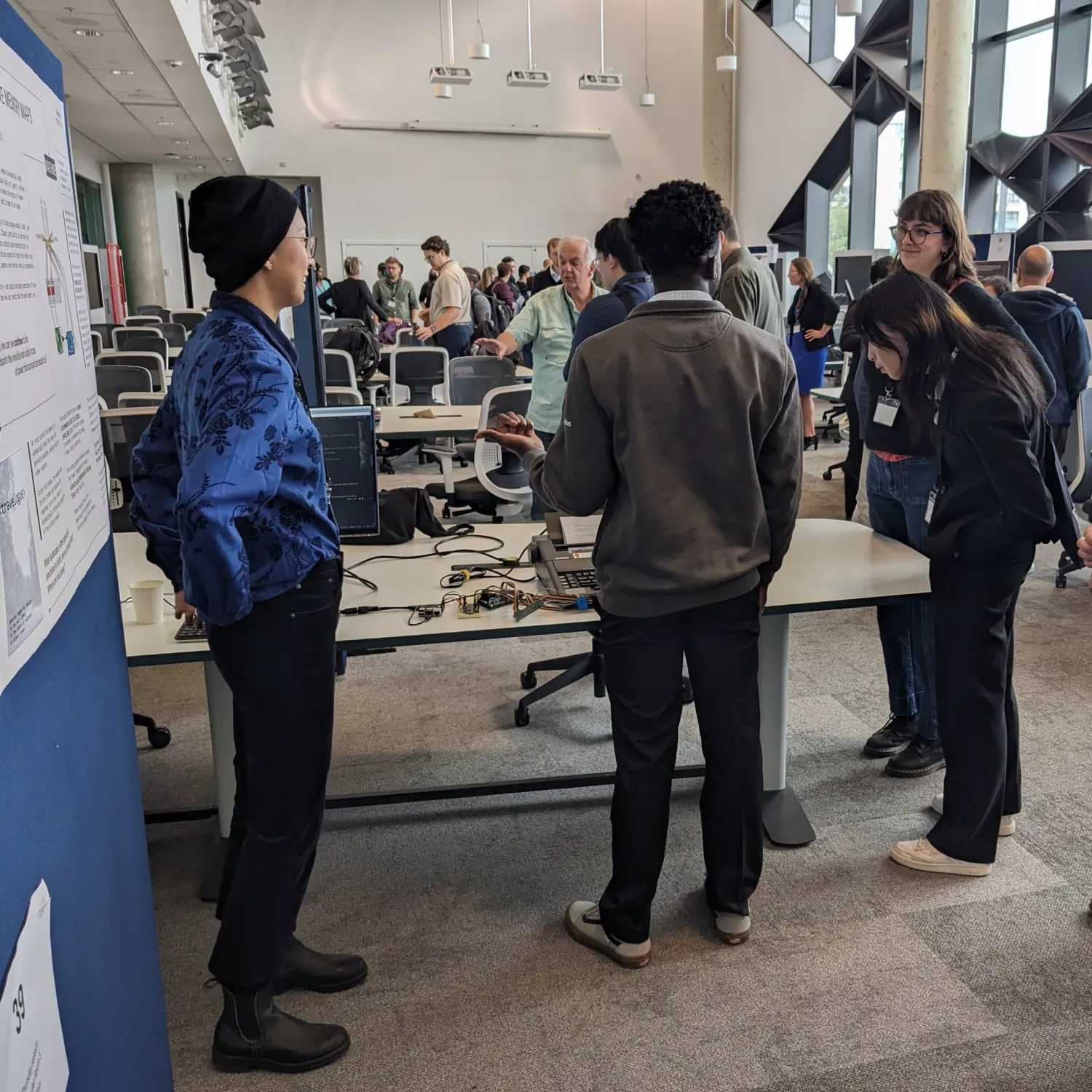
Posters which are submitted in a short abstract format, and upon acceptance are provided space within a dedicated poster session to showcase the work as well as the abstract and poster being published in the conference proceedings.
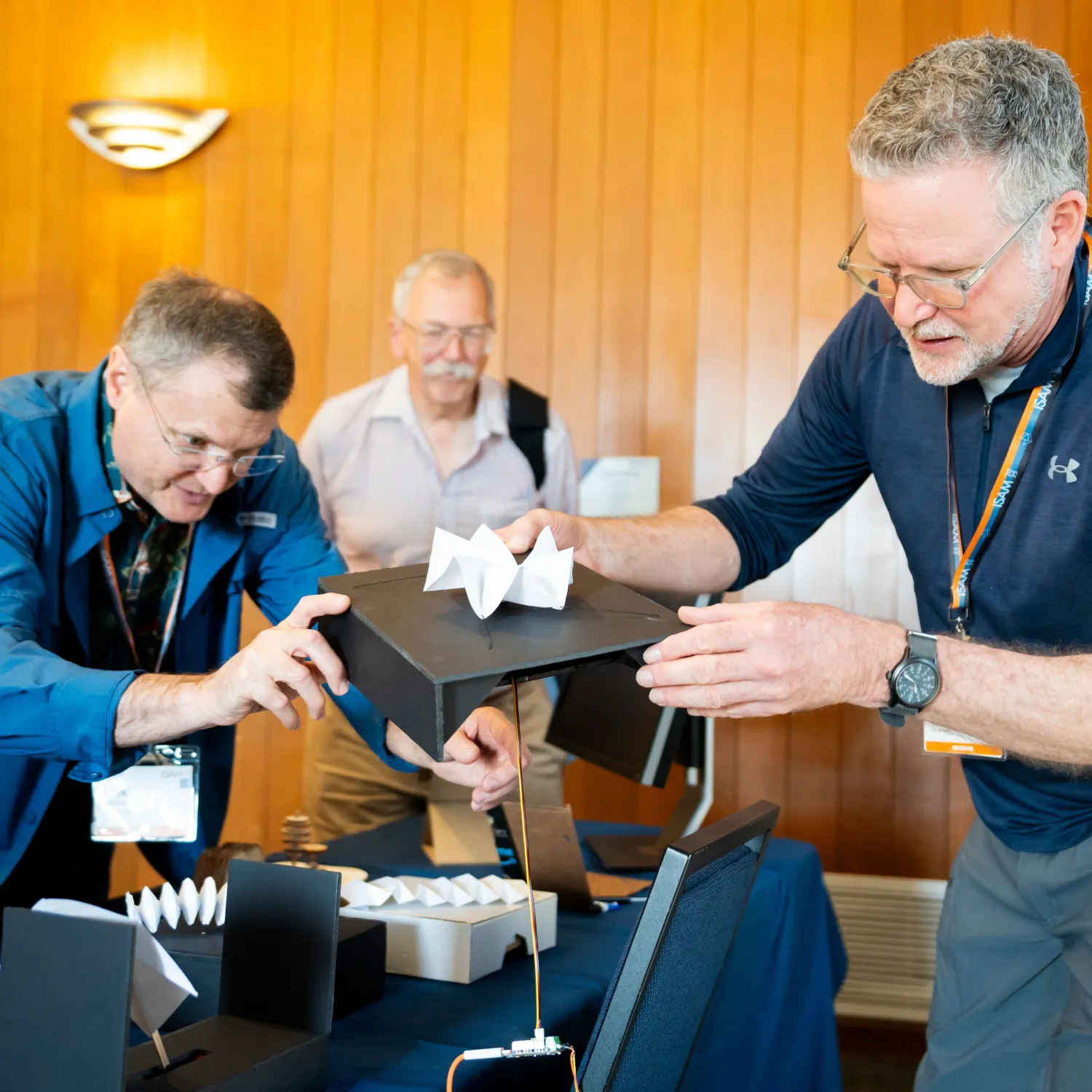
Demos require authors/designers submit demonstrations with a 1 to 2-page abstract, and upon acceptance, are invited to showcase a live demonstration at the conference. Demonstration abstracts are published in the conference proceedings.
Important Dates for Presenters
January 8, 2026 - Early Registration Opens
January 20, 2026 - Call for Papers and Posters Opens
March 15, 2026 - Abstract Deadline (optional screening)
May 30, 2026 - Full Paper & Poster Submission Deadline EXTENDED
July 10, 2026 - Presenter Acceptance Notifications Sent EXTENDED
August 6, 2026 - Early Registration Closes EXTENDED
August 6, 2026 - Revised Paper/Poster/Demo Deadline EXTENDED
August 6, 2026 - Paper author registration deadline
August 15, 2026 - Presenter Upload Portal Opens
September 15, 2026 - Regular Registration Closes
September 30, 2026 - Final Presentation Upload Deadline
Potential Topics
Makerspace Ecosystems and Infrastructure
Sustainable models for funding, staffing, and operations
Designs that prioritize safety, accessibility, and inclusion
Institutional policies and partnerships that support growth
Pedagogies for Maker-Centered Learning
Teaching approaches that integrate making into courses
Practical ways to assess maker learning and creativity
Mentorship and peer learning in makerspace education
Innovation, Prototyping, and Design Practice
How students navigate iterative design in limited time
The role of failure, feedback, and iteration in outcomes
Interdisciplinary teamwork as a driver of innovation
Equity, Access, and Inclusion
Barriers faced by underrepresented groups in maker spaces
Programs that expand equitable access to tools and mentoring
Designing tools and spaces that are universally accessible
Global and Cross-Cultural Maker Collaborations
Cross-cultural differences in design and teamwork
Impact of international maker exchanges on social awareness
Culturally responsive teaching in global design programs
Technology, Tools, and Digital Transformation
Use of AI, AR/VR, robotics, and IoT in maker learning
Digital fabrication and automation as teaching tools
Data, ethics, and digital equity in academic making
Community, Culture, and Impact
How maker communities and collaborative cultures form
Storytelling and reflection as tools for learning
Long-term impact of makerspaces on students and regions
Research and Scholarship in Making
Frameworks for understanding maker learning and practice
Mixed-methods approaches to study creativity and collaboration
How makerspace research is evolving as a field
Papers
Paper authors should submit an initial draft (4-6 pages) using the ISAM paper template by 30 May. Drafts should:
Clearly state the contribution and goals of the work
Describe methods and cite relevant literature
Include results and analysis completed so far
Explain any ongoing work and what you expect to finish before the conference
For inspiration, please review the example topics section and the IJAMM symposia archive of accepted ISAM papers.
The ISAM Program Committee will review all submissions and issue one of three decisions:
Accept
Revise and resubmit
Reject (with the option to submit a Poster or Demo by 30 July)
Authors invited to revise and resubmit must submit an updated paper that responds to reviewer feedback by 30 July.
Final publication versions are due 30 September. Accepted papers will be presented in person at the ISAM 2026 conference.
Paper template (Example of correctly formatted final paper)
See important dates below.
Posters
Presenting a poster at ISAM is a way to share your findings, best practices, or ideas with your fellow practitioners. Consider a poster (versus a paper or demo) if your work is best explained through visual examples, you are sharing preliminary findings, or your ideas are best shared via in-person discussion.
A poster should invite viewers to explore your process and/or findings and spark conversations or debate about potential applications in their own space. When images, diagrams, and carefully selected text are combined, a poster can stand alone, but its impact is bolstered by your presence.
Get inspired by previously accepted posters on the IJAMM website (years 2022 and prior).
We have created a poster proposal template (see below) with two main sections:
1. What do you want to share?
Explain the core concept you want to explore in a short abstract (~300 words). You could share:
An innovative idea or observation
Key takeaways from an experiment or study
A learning experience
A making-related discovery
A cool thing worth sharing
Focus on what makes your work specifically relevant and compelling to the makerspace community. Make it clear for the committee how your poster might inform, inspire, or otherwise influence your peer institutions. If accepted, the text of your abstract—along with your final poster—will be published as part of the conference proceedings.
2. How will you show it?
The best posters show more than they tell. Help the committee understand how you intend to visually communicate your ideas. While we realize this is not your final poster, you must include sufficient information to convey the work and ensure it is legible to reviewers. These initial drafts should clearly state the contribution and methods, cite any relevant literature you are aware of, and include any results and analysis obtained thus far. Feel free to use any of the following:
Rough sketches
A text-based description of your intended approach
Sample graphs or charts
Layout wireframes
Image mockups
When considering your approach, remember that viewers should be able to grasp your main points quickly and visually. Your response to this question will not be published; it is purely to help the committee understand why a poster is the ideal format for sharing your work.
See important dates below.
Notes:
Posters will be reviewed and selected for acceptance by a committee led by the Poster Chairs. Submissions will not be anonymized for review.
Authors must bring their own physical poster for the poster session.
At least one author for each accepted poster is required to register to attend ISAM and present their poster at the conference in-person at the conference. Any authors who wish to co-present and/or attend must also be registered.
Acceptable poster sizes: (48 × 36 in.) landscape.
Demos
Demonstrations are back for ISAM 2026! Demos give authors the chance to bring physical prototypes and hands-on experiences to the conference and showcase them directly to attendees.
A demo might be:
A manufacturing or fabrication technique
A makerspace operations or management tool
An interactive installation, design exploration, or provocation
Demo Format & Schedule
Dedicated demo sessions will give attendees time and space to interact directly with your work.
Installation & presentation: Sunday evening, October 11
Authors are expected to be on-site with their demo during the designated demonstration session(s).
Who Are Demos For?
Demos are treated similarly to papers or posters and should highlight academic, pedagogical, or research work from your makerspace or institution.
If you are a company wishing to feature a product, tool, or technology, please explore corporate sponsorship options through the Sponsor section of the website. (HEMI strongly encourages showcasing new technologies through these channels.)
Submission Requirements
Demo authors should submit an extended abstract (1-2 pages) using the ISAM template by 10 July.
Your abstract should:
Explain the value and relevance of the demo to the ISAM community
Clearly describe the interactive or experiential nature of the demo
Make it clear why this work is best presented as a demonstration, not just a paper or poster
A limited budget may be available to help with reasonable transport, installation, or operation costs, at the discretion of the ISAM committee.
Review, Acceptance, and Publication
The Demos Committee will review all submissions and provide feedback.
For accepted demos, final digital publication versions are due 30 September.
Authors must bring their own demo and be present during the demo session.
The demo abstract will be published in the official symposium proceedings.
Demo Template (Example of correctly formatted final demo)