
IST 2026 - Banff

Welcome to IST 2026 - Banff
The International Society for Tractography invites you to its second annual conference, set against the stunning backdrop of the Canadian Rocky Mountains in Banff, Alberta.
Registration for this event closed September 30, 2026. If you still wish to register or book accommodations contact info@tractography.io and we will do our best to accommodate.
A Conference for Everyone
IST 2026 brings together researchers, clinicians, and developers from around the world to advance the science of tractography through scientific lectures and interactive Master Classes. This year's program bridges the gap between methods, discovery, and clinical impact.
Hosted at the Banff Centre for Arts and Creativity, a world-class conference facility nestled within Banff National Park, IST 2026 offers an intimate setting designed for meaningful scientific exchange. Enjoy on-site meals with panoramic mountain views, and explore the charming town of Banff just a short walk from campus.
Whether you are an established investigator or an early-career researcher, IST 2026 is your opportunity to connect with the global tractography community in one of the most inspiring settings on earth.
Keynote Speakers

Dr. Jahanshad is Professor of Neurology and Biomedical Engineering and a key developer of the ENIGMA Consortium, one of the world's largest collaborative neuroimaging initiatives, spanning hundreds of institutions globally.
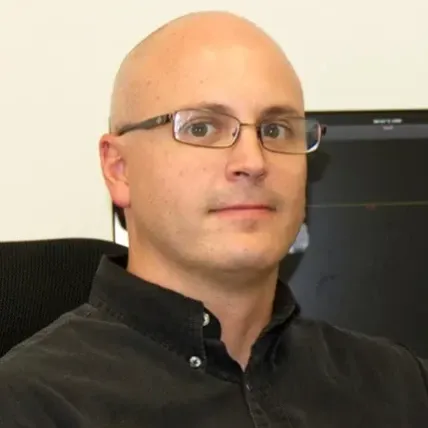
Dr. Concha directs the Brain Connectivity Laboratory and leads Mexico's National Laboratory for MRI, with extensive expertise in diffusion MRI validation using both clinical cohorts and animal models.
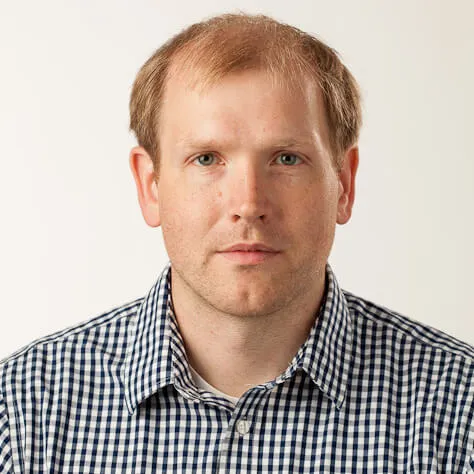
Dr. Collman is Associate Director of Informatics at the Allen Institute and a leader of the landmark MICrONS connectomics project, which produced the most detailed wiring diagram of a mammalian brain to date.
Afternoon Workshop/Education Sessions
Affernoon Education/Workshop sessions will take the form of Masterclasses. Attendees will have the opportunity to attend one of the following three themes each day. Follow a single track or choose your own adventure, by attending a different theme each day.
Theme #1 - Anatomy & Validation: These masterclasses pair the microscopy techniques used to access ground truth for validating dMRI fiber orientations and tractography with the neuroanatomy that shapes white matter architecture and tractography outcomes. Each masterclass runs in two parts: validation (a) and anatomy (b).
Speakers: Anastasia Yendiki, Kurt Schilling, Sarah Heilbronner, Elena Borra, Martin Parent, Laurent Petit
Masterclass 1 - Axonal Tracers and Long-Range Association Pathways
1a (Validation) - Axonal tracers. Tracer injections allow us to follow the long-range trajectories of axons, as they leave an injection site, split into distinct bundles, and course through the white matter to reach their destinations. As such, they are ideal for validating tractography.
1b (Anatomy) - Long-range association pathways. Explore the anatomy and tractographic reconstruction of major long-range association pathways, with a focus on solving common technical challenges in pathway identification and reconstruction.
Masterclass 2 - Dense Axonal Markers and Basal Ganglia Connectivity
2a (Validation) - Dense axonal markers. Histological processing of tissue samples with axonal markers (that may or may not be preceded by tissue clearing) allows, e.g., neurofilament or myelin to be labeled throughout the sample. Thus, they are ideal for revealing the local organization of axons within each dMRI voxel and validating fiber orientation distributions.
2b (Anatomy) - Basal ganglia connectivity. Review the structural organization of basal ganglia networks, then apply tractography techniques to tackle practical issues in segmentation, tracking, and validation.
Masterclass 3 - Label-Free Imaging and Shorter-Range Cortical Connectivity
3a (Validation) - Label-free imaging of axonal orientations. These emerging optical imaging techniques rely on intrinsic tissue contrast, rather than a histological label, to image axonal orientations at microscopic resolution. Thus they aim to obviate the cost and tissue distortions associated with histological staining.
3b (Anatomy) - Shorter-range cortical connectivity. Examine the anatomy and functional relevance of short-range association fibers, with an interactive workshop addressing the challenges of reconstructing and interpreting these pathways.
Theme #2 - Tractography Analysis & Methods: The “master classes” are a series of 3 independent sessions covering the key steps from converting DICOM files to analysing fiber tracts. For each class, two speakers will lay theoretical foundations of specific steps of the (long) fiber tractography pipeline, and provide live demos using different softwares with an educational spirit.
Speakers: Neda Jahanshad, Chiara Maffei, Alexander Leemans, Maxime Descoteaux, Flavio Dell'Acqua, Maxime Chamberland
Masterclass 1: Data preparation, preprocessing, fiber orientations
Masterclass 2: Fiber tractography: deterministic, probabilistic, more
Masterclass 3: Tractography analyses
Theme #3 - Clinical Applications of Tractography: Tractography occupies a unique position among advanced neuroimaging techniques, given that it has recognized clinical uses. As a result, tractography developers can benefit from an existing framework to translate their new techniques into clinical uses. However, not all clinical institutions use tractography routinely, and most use only very rudimentary techniques, despite the major advances in tractography in the past 10-15 years. The reason for this slow uptake of new techniques is that what constitutes a clinically applicable method is not entirely well established. The objective of these sessions is to bring together clinicians and methods developers, to share their experiences on the uses of tractography or the implementation of new techniques in clinical contexts, in order to elucidate what constitutes clinically-useful advances and how to best implement them in clinical practice. This series will consist of three sessions, each focused on one clinical application (epilepsy, neuro-oncology, and neuromodulation) showcasing hands-on demonstrations of tractography. At the end of these sessions, the audience will gain a better appreciation of how tractography can impact clinical practice, how to overcome institutional barriers to implement new techniques, and what techniques are likely to be clinically impactful.
Speakers: Sami Obaid, Guillaume Theaud, Joseph Yang, Darren Clark, Conrad Rockel, Adrianna Giuffre, Candice Poon
Masterclass 1 - Tractography in Epilepsy
Masterclass 2 - Tractography in Neuro-oncology
Masterclass 3 - Tractography in Neuromodulation
The Venue
IST 2026 will be hosted at the Banff Centre for Arts and Creativity, a world-class conference and cultural institution located on a 43-acre mountain campus in the heart of Banff National Park, a UNESCO World Heritage Site.
Founded in 1933, the Banff Centre has a long tradition of bringing together thinkers and creators from around the world. Its modern conference facilities are surrounded by the towering peaks of the Canadian Rockies, offering an environment that is both professionally equipped and genuinely inspiring.
The campus sits on the side of Tunnel Mountain with sweeping views of the Bow Valley and surrounding ranges. On-site dining, accommodations, and recreation facilities mean everything you need is steps away. The charming town of Banff is a short walk downhill, with restaurants, cafes, shops, and riverside trails to enjoy during your free time.
Travel to the Banff Centre is straightforward. Calgary International Airport is the closest major hub, and a direct shuttle service runs from the airport to the Banff Centre with no transfers required. Once you arrive on campus, you can leave the logistics behind and focus on the science.
Visit our official website (www.tractography.io) for more information about the IST

Location
Banff Centre for Arts and Creativity
107 Tunnel Mountain Drive
Banff, Alberta
Canada, T1L 1H5
Dates
Registration period:
June 3, 2026 - 9:00 AM MDT - October 23, 2026 - 11:59 PM MDT
Submission period:
July 22, 2026 - 9:00 AM MDT - August 19, 2026 - 11:59 PM MDT
Contact us
If you have any questions, please contact info@tractography.io