Western Canada Conference on Computing Education 2025
Mount Royal University
April 28-29, 2025

Mount Royal University, Calgary, Alberta, Canada

April 28-29, 2025

Welcome

WCCCE (pronounced “Wicky”) is Western Canada’s chance to come together and discuss the challenges, solutions, and opportunities in computing education. With presentation formats ranging from 5-minute blizzard talks to comprehensive panel sessions, there is space for you to share your ideas, be they nifty assignments or complete works of pedagogical research. Come meet with other educators in post-secondary and K-12, as well as industry professionals and government partners with an interest in teaching computing related courses.

Tentative presentation schedule now available.

Keynote Speakers

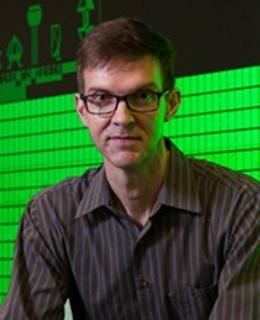
Dr. John AycockUniversity of Calgary

Abstract:

Learn from my teaching experiments, both successful and unsuccessful. In this talk I'll unabashedly reflect on the most unusual and unorthodox things I've tried in my classes over the years, including unessays, ungrading, and pivoting to embrace unintelligent "AI" systems. Be not uninspired!

Bio:

John Aycock is a professor in the Department of Computer Science at the University of Calgary. He started teaching as a TA back in 1991 and, frankly, it's been downhill ever since. Over the years, he's created new courses on computer viruses, spam and spyware, retrogame implementation, and reverse engineering; the first two proved controversial and made international headlines. Dr. Aycock routinely builds tools, games, and systems for use in teaching, and has published work at SIGCSE, ITiCSE, SIGITE, and WCCCE. He continually aspires to improve his teaching practice, drawing on areas including storytelling, improv, preaching(!), and the humanities.

Dr. Katrin BackerOwner, Mink Hollow Media Treasurer, CAID (Canadian Association of Instructional Designers). Adjunct Professor, Mount Royal University (Calgary, AB, Canada). Licensed ARBA Rabbit Registrar #1128

Abstract

We do what we do because we want to help people learn.

I am confident that almost all of us—and certainly everyone currently at this conference—would agree with this. So why do we seem to make it so hard for them to learn?

I have spent much of my last 25 years or so trying to answer those questions, and while I don’t have ALL the answers, I have learned a few. It’s not the appealing visuals, or the badges, points, and leaderboards that make so many games inviting and effective. It is the creation of a safe space to explore, to practice mastery, to exercise agency, to try something that might fail, and the freedom be creative. The elements that support these mind-sets are the same elements we can use to create a classroom that feels safe for learning.

This talk will describe how we can use gameful elements in an informed and thoughtful way to have a positive impact on our students’ perceptions of risk without lowering our standards.

Bio:

Katrin is an award winning, internationally known expert in the design & analysis of serious games and of gamification in the classroom. She holds 2 computer science degrees and a PhD in educational technology. She’s a certified Instructional Designer with a graduate certificate in serious game design and research.

She has over 40 years of teaching experience and has taught computer science (CS), video game design, game-based learning (GBL) and technical writing. Her teaching innovations are widely recognized, and she has many publications, including 4 books.

Finally, to counterbalance a very digital life, she runs a small farm where she has been raising rabbits waterfowl and other animals for over thirty years. This is what accounts for the occasional bit of poo on her shoe.

Dr. Beth Richardson and Dr. Sara SmithMount Royal University

Abstract:

Bioinformatics is a rapidly growing field at the intersection of biology and computer science, aimed at analyzing and interpreting complex biological data. However, neither computer science nor bioinformatics are consistently included in undergraduate biology curricula in Canada. There is a widespread assumption that, as “digital natives”, the current cohort of undergraduates will enter the university with an advanced understanding of technology and computer science, but this does not appear to be reflected in assessments of digital literacy or computational skills. Advances in bioinformatics and the increasing prevalence of “big data” in research has exposed this gap in undergraduate education.

In our keynote presentation, we discuss challenges and opportunities of integrating coding, data science, and bioinformatics into a standard biology undergraduate curriculum based on our experiences as professors at Mount Royal University, an undergraduate institution. We emphasise the importance of including basic data science, data literacy principles, and process skills as early as possible, and give practical guidance for building student confidence in their computational and data science skills, including examples of assignments and demonstrations we have used to bring computer science principles to a biological audience. We also propose how resources like the Canadian Bioinformatics Hub can be applied to undergraduate education, and a framework for strengthening routes into bioinformatics training programmes, graduate degrees, and industry careers.

Bios:

Dr. Richardson is an Assistant Professor in Cell Biology and Genetics at Mount Royal University, Beth teaches computational biology classes at MRU and is developing a Bioinformatics course for Biology majors and non-majors, to be offered in Fall 2026.

Dr. Smith's research interests were strongly shaped by her time in Informatics, and her current research program focuses on how to use genomics and computational modelling to create more informed projections of where species may be able to persist under climate change scenarios. At MRU, Sara teaches quantitative biology and mentors undergraduate students in computational projects focusing on ecological genomics.

WCCCE Program Committee

Ildar Akhmetov (Northeastern University - Vancouver Campus)

Bill Bird (University of Victoria) - Chair

Apoorve Chokshi (Mt. Royal University)

Leanne Wu (University of Calgary)

WCCCE-2025 Organizing Committee

Amy McCarthy

Charley Hepler

Charlotte Curtis

Gabriel Jerry-Bolduc

Patrick Perri

Sponsors

We are grateful to our sponsors who made this conference possible.

FourWaves
Faculty of Science and Technology, MRU
Yanos Aerospace
Wiley Books

Special acknowledgement and thanks.

The members of the WCCCE2025 Organizing committee wish to extend a special and sincere expression of gratitude to Amy McCarthy, Administrative Assistant for the Department of Mathematics and Computing at MRU.

Without your efforts and patience, reminiscent of Athena Glaukopis the goddess of clear sight and wisdom, this conference would never have happened.

Location

Mount Royal University

4825 Mount Royal Gate Southwest

Calgary, AB

Canada, T3E 6K6

Contact us

If you have any questions, please contact wccce2025@mtroyal.ca

Powered by
Run your next event
with Fourwaves