Plenary speakers

Prof. Inès E. AchouriUniversity of Sherbrooke

Inès Esma Achouri is an Associate Professor in the Department of Chemical and Biotechnological Engineering at Université de Sherbrooke, where she holds the prestigious Canada Research Chair in Process Intensification for Advanced Catalysts and Sustainable Energy. Her research lies at the intersection of catalysis, energy systems, and sustainable process engineering, with a particular focus on designing intensified and low-carbon technologies for chemical and pharmaceutical applications. She serves as the Lead for the Energy Storage and Conversion axis of the Réseau Québécois de l’Énergie Intelligente (RQEI), contributing to Quebec’s energy transition through collaborative research in clean technologies. She is also Co-Director of the Groupe de recherche sur les technologies et procédés de pointe (GRTP), where she oversees state-of-the-art facilities dedicated to advanced process development, scaled-up technologies, and energy system optimization. Her academic path spans three countries: she earned her engineering degree in pharmaceutical processes in Algeria, her master’s in biomedical and Pharmaceutical Engineering in France (Université Claude Bernard Lyon 1), and her Ph.D. in Chemical Engineering in Canada (Université de Sherbrooke), followed by postdoctoral training at École Polytechnique de Montréal. Her innovative work includes the development of hybrid reactors, cold plasma-assisted conversion, continuous processing, and the use of renewable and waste-derived feedstocks to create value-added materials. Her multidisciplinary approach supports the creation of high-performance solutions for environmental and energy challenges. She is also deeply committed to training the next generation of engineers and scientists, regularly mentoring graduate students and postdoctoral fellows, and promoting inclusive, hands-on learning environments.

Prof. Elizabeth J. EterighoFederal University of Technology Minna

Elizabeth Jumoke Eterigho is an Associate Professor of Chemical Engineering with over 30 years of experience in academia, administration, and consultancy. She currently serves as Deputy Director at the Advancement Office, Federal University of Technology, Minna (FUT Minna), and is the immediate past President of the Association of Professional Women Engineers of Nigeria (APWEN). A COREN-registered engineer and Fellow of both the Nigerian Society of Engineers (NSE) and the Nigerian Society of Chemical Engineers (NSChE), she earned her Ph.D. in Chemical Engineering (Biofuel & Catalysis) from Newcastle University, UK. Prof. Eterigho has held numerous leadership roles, including membership on the University Governing Council and Energy Blueprint Committee. She has contributed extensively to teaching, research, and mentoring, supervising numerous undergraduate and postgraduate projects. She has published over 70 peer-reviewed papers and book chapters, and regularly serves as a reviewer for international journals and conferences. Her work has earned her national and international awards, including the prestigious COREN Presidential Award. A passionate STEM advocate, she founded Trade Skills 4 Girls (TS4G) to empower disadvantaged young women with hands-on technical and entrepreneurial skills. She is deeply committed to promoting early STEM education and reducing gender disparities in engineering. She also trains young engineers and rural women in the use of emerging technologies, aiming to improve productivity and sustainable livelihoods across communities.

Prof. Daniele MarchisioPolytechnic University of Turin

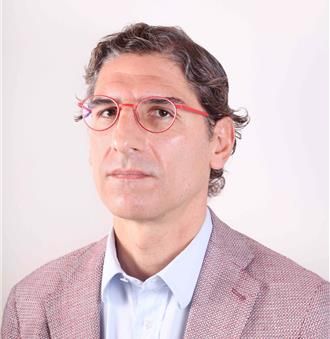
Daniele Marchisio obtained a PhD in Chemical Engineering in 2002 from Politecnico di Torino and after post-docs at Iowa State University and ETH Zurich, joined Politecnico di Torino, where is now Full Professor at the Department of Applied Science and Technology. He has been visiting professor at University College London, CSIRO Melbourne and Beijing University of Chemical Technology. He has published more than 200 papers resulting in >11000 citations and in a H-index of 51 (January 2025; source google scholar). His research focuses on the investigation of polydisperse multiphase systems with emphasis on the development of computational models, based on computational fluid dynamics, full-atom and coarse-grained molecular dynamics. His book, published for Cambridge University Press in 2013 with Prof. Rodney Fox, offers an authoritative treatment of the field. Acting as PI he has received funding from the Italian Ministry of Research, the European Commission, several foundations, and chemical industries. He has been a member of the Academic Senate of Politecnico and the Gender Observatory. He is currently member of the Equal Opportunity Committee of Politecnico, Chair of the Working Party on Crystallization of the EFCE and Associate Editor of the Canadian Journal of Chemical Engineering. He is a passionate advocate for diversity, equity and inclusion in scientific research.

Keynote speakers

Prof. Maria C. IliutaLaval University

Maria C. Iliuta is professor in the Department of chemical engineering at Université Laval (Quebec, Canada) since 2006. She received her PhD in Chemical Engineering from Université Catholique de Louvain (Belgium) and performed a postdoctoral fellowships in phase equilibria thermodynamics, separation technologies, and heterogeneous catalysis at the Technical University of Denmark (DTU) and Université Laval. Her research interests are especially directed towards process intensification, catalysis (heterogeneous, enzymatic, photo- and electro-catalysis), separations, capture and catalytic conversion of CO2, waste valorization, alternative fuels/hydrogen production, and process modeling. She co-authored more than 150 referred publications, 5 books/book chapters, and 1 patent. She is a member of CIRCUIT (Centre for Innovation and Research on Carbon Utilization in Industrial Technologies, NSERC CREATE program).

Prof. Vivek RanadeUniversity of Limerick

Vivek Ranade is the Bernal Chair of Process Engineering at the Bernal Institute, University of Limerick, Ireland. He leads the ‘Multiphase Reactors and Process Intensification’ group which integrates experiments, modelling, reaction engineering and machine learning to advance understanding of multiphase flows, reactors and process intensification. His group is developing fluidic devices, MAGIC (modular, agile, intensified and continuous) processes and ‘Factory in a box’ platforms. These innovations and intensification strategies support resource conservation, decarbonisation, and valorisation of waste - contributing to sustainability (of planet). His work in MAGIC processes, mixing, emulsions and crystallisation is driving advancement in health care, nutrition, and personal care products, enhancing overall wellbeing (of people). Before moving to Ireland, Vivek led chemical engineering research at CSIR - National Chemical Laboratory (NCL), and developed solutions, products, and processes for variety of applications. He has also held research positions at ETH, Zurich; TU Delft and University of Twente, The Netherlands. With over 250 papers, 20+ patents (granted/ filed) and nine books, he has made significant contributions to his field. Vivek is also a Co-founder of two technology companies: Tridiagonal Solutions (www.tridiagonal.com) and VIVIRA Process Technologies (www.vivira.in). He is currently a Deputy Editor of ‘ACS Engineering Au’. His talk will be titled: Revisiting MAGIC (modular, agile, intensified and continuous) Processes: Towards ‘Factory in a Box’ platforms.

Prof. Georgios StefanidisNational Technical University of Athens

Georgios Stefanidis (Full Professor) holds an MSc degree in Chemical Engineering from the National Technical University of Athens (NTUA, Greece) and a PhD degree in the same field from Ghent University (Belgium). He is Director of the Department of Process Analysis and Plant Design and Head of the Chemical Process Engineering Laboratory at the School of Chemical Engineering at NTUA. He has co-authored over 150 peer-review papers in the broad field of Chemical Reaction Engineering and Process Intensification, mostly focusing on alternative energy forms and transfer mechanisms (microwaves, plasma, ultrasound and light) and the first book on the “Fundamentals of Process Intensification” (Wiley VCH, 2019). His research activity includes modelling, design and development of intensified reactors and reactive separation processes for a broad range of applications including, among others, biomass gasification, reforming of hydrocarbons and oxygenated fuels, CO2 utilization, polymerization and reactive crystallization. He is currently Chairman of the EFCE Working Party on Process Intensification, Executive Editor of the Chemical Engineering and Processing: Process Intensification Journal (Elsevier) and serves on the Scientific Committee of the Association for Microwave Power in Europe for Research and Education (AMPERE).

Prof. Yong LuoBeijing University of Chemical Technology

Yong Luo is a full professor in the department of Chemical Engineering and the High Gravity Engineering Research Center of the Ministry of Education, Beijing University of Chemical Technology (BUCT), China. He received a bachelor degree in Mechanical Engineering and PhD degree in Chemical Engineering in July 2008 and July 2013 from BUCT under the supervision of Prof. Jian-Feng Chen. As a visiting scholar from 2011 to 2012, he worked in Washington University in St. Louis under the supervision of Prof. Milorad P. Dudukovic. His research interests involve the fundamental and application of rotating packed bed (RPB) for process intensification. Prof. Luo has published more than 150 peer reviewed journal papers. He was the winner of Youth Award of Hou Debang Science and Technology Award (2020), Young Researcher Award of 15th International Conference on Gas-Liquid and Gas-Liquid-Solid Reactor Engineering (GLS 15, 2022), Excellent Young Scientists Fund by NSFC (2021), and National Science Fund for Distinguished Young Scholars by NSFC (2025). He was serviced as the Deputy Secretary-General of Chemical Process Intensification Division of Chemical Industry and Engineering Society of China (CIESC), the member of the International Scientific Committee of the Second/Third/Fourth International Conference on Chemical Process Intensification (IPIC2/ IPIC3/ IPIC4), and the member of the International Scientific Committee of the 27th International Symposium for Chemical Reaction Engineering (ISCRE 27).

Prof. Nelly Ramirez CoronaUniversity of Americas Puebla

Nelly Ramirez has a Ph.D. in Chemical Engineering from the Instituto Tecnológico de Celaya (2006), a M.Sc. in Chemical Sciences from the same institution (2002), and a B.Sc. in Chemical Engineering from the Universidad Autónoma de Tlaxcala (2000). She has been a full-time professor in the Department of Chemical and Food Engineering at the Universidad de las Américas Puebla since August 2007. She has taught courses at the undergraduate level in Chemical Engineering, the master's level in Chemical Engineering, and the doctoral level in Food Science, contributing to professional training across all three academic levels.

To date, she has supervised 25 undergraduate theses, 8 master’s theses, and 5 doctoral dissertations. Her research focuses on Process Engineering, particularly on the evaluation of emerging technologies for food processing. She is a member of the National System of Researchers (SNII), Level I, and has authored over 80 peer-reviewed scientific articles published in indexed journals, 11 book chapters with internationally recognized publishers, and 13 full-length conference papers. Her body of work has received over 1,900 citations, with an h-index of 20 (Google Scholar profile).

She has served on evaluation committees for various CONAHCyT calls, and as a reviewer for thesis projects at CONCYTEP and research proposals at the University of Guanajuato. She is a reviewer for several high-impact scientific journals, including Journal of Cleaner Production, Industrial and Engineering Chemistry Research, Chemical Engineering Research and Design, Journal of Food Engineering, Journal of Food Process Engineering, Food and Bioproducts Processing, Chemical Engineering and Processing, and the Revista Mexicana de Ingeniería Química. She has also served as a guest editor for Chemical Engineering and Processing-Process Intensification.

She has been a member of graduate thesis committees at various universities across Mexico, all of which are part of the National Graduate Programs (SNP). She has participated in research projects funded by CONAHCyT, the Mexican Secretariat of Foreign Affairs, the British Council, as well as in industry-linked projects with major food companies, notably collaborations with MONDELEZ México and the Technology Development Directorate at Grupo BIMBO. From 2013 to 2025, she was a member of the Governing Board of the Mexican Academy of Research and Teaching in Chemical Engineering (AMIDIQ), serving as President of the Governing Board during the 2023-2025 term.

Alexey Peshkovsky, Ph.DIndustrial Sonomechanics

Dr. Alexey Peshkovsky is the founder, president, and chief scientific officer of Industrial Sonomechanics. He holds a B.A. degree in chemistry from the University of Pennsylvania and a Ph.D. degree in physical chemistry from Columbia University. With over 30 years of experience as a researcher, entrepreneur, product developer, and scientific director, Dr. Peshkovsky's work has primarily focused on instrumentation design and process development across multiple industries. Dr. Peshkovsky is the primary author of numerous scientific papers, patents, conference presentations, and books.